Call us now :08045814271
 Send Inquiry
 Send Inquiry
Single Mode Unarmoured Fiber Optic Cable
Price 30 INR/ Meter
Single Mode Unarmoured Fiber Optic Cable Specification
- Usage & Applications
- Outdoor and indoor installations for high-speed data transmission
- Conductor Type
- Single Mode
- Diameter
- 6 mm (standard)
- Core Number
- 1, 2, 4, 6, 12, or more
- Operating Temperature
- -40C to +70C
- Weight
- Approx. 35 kg/km (varies by core & jacket)
- Cable Type
- Single Mode, Unarmoured
- Number of Conductor
- 1 or Multiple (typically: 1, 2, 4, 6, 12, 24 cores available)
- Armored Material
- None (Unarmoured)
- Conductor Shape
- Round
- Dielectiric Strength
- >3 kV/mm
- Impedance
- N/A (for fiber optic cables)
- Rated Temperature
- -40C to +70C
- Insulation
- LSZH / HDPE
- Tensile Strength
- Short term: 1500 N, Long term: 600 N
- Features
- Low attenuation, High bandwidth, Excellent mechanical and temperature performance, Flexible, Lightweight, Easy installation, UV resistant, Moisture proof
- Install Type
- Direct installation, duct installation, overhead installation
- Core Material
- Silica Glass
- Product Type
- Single Mode Unarmoured Fiber Optic Cable
- Length
- Customizable (Standard lengths: 1 km, 2 km, etc.)
- Voltage
- N/A (Fiber optic, no electrical conductivity)
- Insulation Material
- UV resistant LSZH (Low Smoke Zero Halogen)
- Application
- Telecommunication, Fiber to the Home (FTTH), Data centers, Networking, Broadband internet, Long-distance and metropolitan area networks
- Conductor Material
- Glass (Silica) Fiber
- Jacket Material
- HDPE (High Density Polyethylene) or LSZH
- Storage Temperature
- -40C to +70C
- Connector Color
- Yellow (standard for single mode)
- Shield Material
- None (Unarmoured type)
- Jacket Color
- Yellow
- Dimension (L*W*H)
- Varies as per length (example: 1000m x 6mm x 6mm for standard cable)
- Color
- Yellow
- Material
- Silica, HDPE/LSZH
- Size
- Outer diameter: 6 mm (standard), other sizes available
- Expected Service Life
- Greater than 25 years
- Humidity Resistance
- Up to 100% RH at 60C
- Fire Resistance
- LSZH jacket is halogen free and flame retardant
- Packing
- Drum or coil
- Crush Resistance
- Max 1000 N/10cm (short-term)
- Pulling Force
- Max 1500 N (short term), 600 N (long term)
- Attenuation (max)
- 0.36 dB/km @ 1310 nm, 0.22 dB/km @ 1550 nm
- Coating Diameter
- 242 5 m
- Minimum Bending Radius (Operation)
- 10 x cable diameter
- Wavelength
- 1310 nm / 1550 nm
- Minimum Bending Radius (Installation)
- 20 x cable diameter
- Fiber Count
- 1, 2, 4, 6, 12, 24, up to 48 cores available
- Cladding Diameter
- 125 1 m
- Waterproof
- Yes, gel or dry water-blocking yarn available
- Buffer Type
- Tight buffered or loose tube
- Refractive Index Profile
- Step-index fibre
Single Mode Unarmoured Fiber Optic Cable Trade Information
- Minimum Order Quantity
- 100 , , Meter
- Supply Ability
- 1000 Per Day
- Delivery Time
- 1 Days
About Single Mode Unarmoured Fiber Optic Cable
Single Mode Unarmoured Fiber Optic Cable is outdoor cable available with different fiber counts. It comes in durable structure with sturdy jacket materials to ensure to provide excellent performance in different plant applications like ducts, conduit, etc. It is ideal to be used in data communications, networking and other spaces to ensure maximum efficacy. This is a low smoke, zero halogen and fire-resistant Single Mode Unarmoured Fiber Optic Cable widely used in varied needs.Low Attenuation and High Bandwidth
The cable provides exceptionally low transmission loss, with attenuation values of 0.36 dB/km at 1310 nm and 0.22 dB/km at 1550 nm. This feature ensures optimal signal integrity and high bandwidth, making it suitable for reliable, high-speed networking across expansive distances without signal degradation.
Robust and Flexible Construction
With a non-armoured, UV-resistant LSZH or HDPE jacket, this cable is both resilient against environmental stressors and easy to handle. The available tight-buffered or loose tube buffer strengths, combined with its flexibility and lightweight design, facilitate straightforward installation and maintenance in demanding settings.
Versatile Application Range
Ideal for a broad spectrum of uses, the cable supports telecommunication, FTTH, metropolitan networks, broadband internet, and data center connectivity. Its customizable length, core count (148), and compatibility with multiple installation typesdirect, duct, or overheadenhance adaptability for diverse project requirements.
FAQs of Single Mode Unarmoured Fiber Optic Cable:
Q: How is the Single Mode Unarmoured Fiber Optic Cable typically installed?
A: This fiber optic cable is suited for direct, duct, or overhead installation. Its flexible, lightweight form allows for easy handling, while its minimum bending radius ensures safe routing during both installation (20x cable diameter) and operation (10x cable diameter). It is suitable for both indoor and outdoor deployment.Q: What are the key benefits of using this cable for long-distance data transmission?
A: The main advantages include low signal attenuation (0.36 dB/km @ 1310 nm, 0.22 dB/km @ 1550 nm), high mechanical strength, UV and moisture resistance, and excellent durability. Combined, these qualities ensure stable, high-bandwidth performance over distances, ideal for telecommunications and broadband applications.Q: Where can this fiber optic cable be effectively used?
A: This cable is ideal for telecommunication networks, Fiber to the Home (FTTH), data center connections, broadband internet, and metropolitan area networks. Its durable, lightweight, and flexible nature also makes it suitable for indoor/outdoor, direct burial, or overhead installations.Q: What process is involved in maintaining the cables long service life?
A: Thanks to its robust materials (HDPE/LSZH jacket, waterproof design, and step-index silica glass fiber), minimal regular maintenance is required. Periodic inspection for physical damage along the route ensures continued optimal performance, as does following recommended bending radius and tensile force specifications during installation and operation.Q: What fiber counts and lengths are available for this cable?
A: The cable is customizable in both fiber core count (available in 1, 2, 4, 6, 12, 24, up to 48 cores) and length (common standards are 1 km, 2 km, or specified as needed). This allows flexibility for varying capacity and layout requirements in different networking scenarios.Q: How does the cable perform under harsh environmental conditions?
A: Designed for resilience, the cable withstands a wide temperature range (-40C to +70C), up to 100% humidity at 60C, and temporary high pulling and crush forces. Its UV-resistant and moisture-proof characteristics help maintain performance even in exposed or challenging environments.Q: What makes the insulation and jacket materials suitable for networking environments?
A: The cable features a Low Smoke Zero Halogen (LSZH) or HDPE jacket that is both flame retardant and halogen free, reducing fire hazard risks and toxic emissions. This makes it particularly appropriate for installation in public buildings and areas with strict fire safety regulations.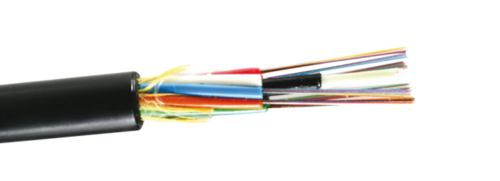
Tell us about your requirement

Price:
Quantity
Select Unit
- 50
- 100
- 200
- 250
- 500
- 1000+
Additional detail
Mobile number
Email

More Products in Single Mode Fiber Optic Cables Category
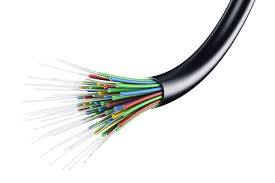
4 core fiber optic cable
Price 30 INR / Meter
Minimum Order Quantity : 100
Conductor Shape : Round
Armored Material : Steel wire armor (optional)
Connector Color : Blue or custom
Rated Temperature : 20C to +70C
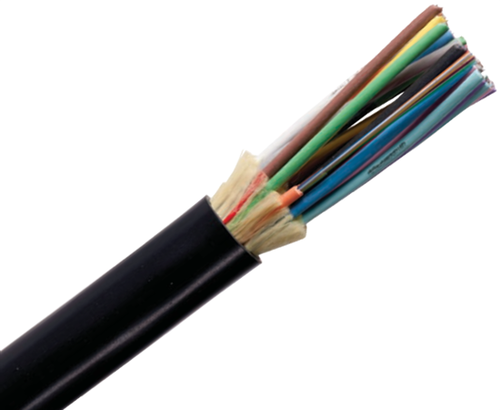
12 core fiber Optic cable
Price 30 INR / Meter
Minimum Order Quantity : 100
Conductor Shape : Round
Armored Material : Steel Tape (where applicable)
Connector Color : Standard Color Code (Yellow/Blue/Green/Red)
Rated Temperature : 40C to +70C
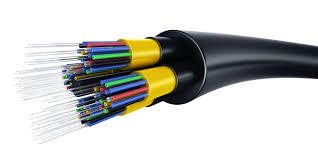
Fiber Optic Cable
Price 30 INR / Meter
Minimum Order Quantity : 100
Conductor Shape : Round
Armored Material : Steel tape (if armored)
Connector Color : Blue, Yellow, or custom
Rated Temperature : 40C to +70C
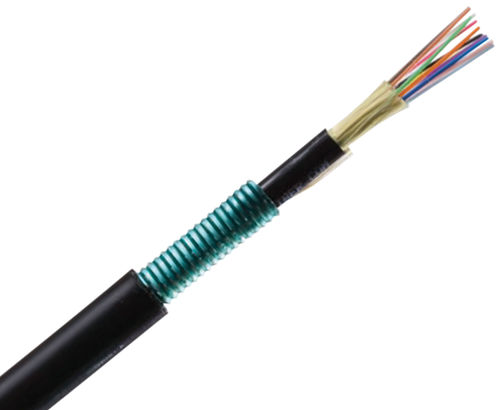
Armored Fiber Optic Cable
Price 30 INR / Meter
Minimum Order Quantity : 100
Conductor Shape : Other, Circular
Armored Material : Corrugated steel tape
Connector Color : Black (as per cable jacket)
Rated Temperature : 40C to +70C

 Send Inquiry
Our Products
- Single Mode Fiber Optic Cables
- Multi Mode Fiber Optic Cables
- ACSR Conductor
- Electrical Wires
- Aerial Bunched Cables
- Rubber Cables
- Networking Cable
- Fire Safety Equipments
- Electrical Conduit Pipes
- Electrical Conductors
- Cable Terminal & Lugs
- Screen Shielded Instrumentation Cables
- Porcelain Insulator
- Cable Trays
- Heat Shrinkable Cable Jointing Kit
- House Wire
- Power Control Cable
- Telecommunication Cables


No. 234, 3rd Floor, Garudachar Complex, (Above Hotel Vijay Vihar) Chickpet, Bengaluru - 560053, Karnataka, India

 Send Inquiry
 Send SMS
Developed and Managed by Infocom Network Private Limited.
