Call us now :08045814271
 Send Inquiry
 Send Inquiry
Fiber Optic Cable
Price 30 INR/ Meter
Fiber Optic Cable Specification
- Impedance
- Not applicable (fiber optic cable is non-conductive)
- Cable Type
- Single-mode (OS1/OS2) or Multi-mode (OM2/OM3/OM4)
- Conductor Shape
- Round
- Core Number
- 1, 2, 4, 8, 12, 24, or per requirement
- Number of Conductor
- 1, 2, 4, 8, 12, 24, or custom
- Armored Material
- Steel tape (if armored)
- Insulation
- PVC or LSZH insulated
- Operating Temperature
- -20C to +70C
- Locking Type
- Standard push-pull connectors (e.g., SC/LC/ST/FC)
- Rated Temperature
- -40C to +70C
- Usage & Applications
- High-speed internet, Data centers, Telecommunication links, CCTV, Military, Industrial automation
- Dielectiric Strength
- High (non-conductive fiber core)
- Install Type
- Indoor, Outdoor, Duct, Direct burial, Aerial
- Diameter
- 2mm, 3mm, 4mm, or custom
- Features
- High-speed data transmission, Low attenuation, Lightweight, Flexible, Immune to electromagnetic interference, Long distance signal transmission
- Core Material
- Pure Silica, doped with Germanium or Phosphorus
- Weight
- Varies with length and type (e.g., 30kg/km)
- Conductor Type
- Single-mode or Multi-mode Fiber
- Tensile Strength
- 800 N (varies by model)
- Product Type
- Fiber Optic Cable
- Length
- Available in various lengths (customizable)
- Voltage
- Non-conductive (does not carry voltage)
- Insulation Material
- PVC/LSZH (Low Smoke Zero Halogen)
- Application
- Telecommunications, Networking, Data transfer, CATV, Broadband, FTTH, FTTB, LAN/WAN
- Conductor Material
- Glass Fiber / Plastic Fiber
- Jacket Material
- PVC / Polyethylene / LSZH
- Storage Temperature
- -40C to +85C
- Connector Color
- Blue, Yellow, or custom
- Shield Material
- Aramid Yarn (Kevlar), Steel Tape (for armored types)
- Jacket Color
- Black, Yellow, Orange, Aqua, or as requested
- Dimension (L*W*H)
- As per cable specification (customizable)
- Color
- Black, Yellow, Orange, Aqua, or custom
- Material
- Glass Fiber / Plastic Fiber, PVC/LSZH Jacket
- Size
- Standard and custom sizes available
- RoHS Compliance
- Yes
- Water Proof
- Available (for outdoor/armored types)
- Fire Retardancy
- UL 94 V-0 (for LSZH jacketed cable)
- Environmental Resistance
- UV Resistant, Moisture Proof, Resistant to Oil and Chemicals
- Return Loss
- >35 dB (Single-mode)
- Max Crush Resistance
- 1000 N/100mm
- Minimum Bend Radius
- 10x cable diameter (installed), 20x (during installation)
- Insertion Loss
- 0.35 dB/km (Single-mode), 1.5 dB/km (Multi-mode)
- Standards Compliance
- Complies with ITU-T G.652D, IEC 60794, RoHS
- Connector Types Supported
- SC, LC, ST, FC, MPO, MTP
Fiber Optic Cable Trade Information
- Minimum Order Quantity
- 100 Meter
- Supply Ability
- 1000 Per Day
- Delivery Time
- 1 Days
About Fiber Optic Cable
We are engaged in offering a remarkable quality spectrum of Fiber Optic Cable that has one or more optical fibers which are used for carrying light. Different optical fiber factors are generally covered with polymer layers separately, and is in a protective tube ideal for the atmosphere where the cord will be fitted. This Fiber Optic Cable is made from quality assured material which makes them highly useful for different applications such as long gap telecommunication and for delivering high speed data link between varied areas in a building.
High Standards Compliance and Safety
This fiber optic cable fully complies with international and industry standards, including ITU-T G.652D, IEC 60794, and RoHS. Fire safety is enhanced with UL 94 V-0 rated LSZH jackets, ensuring low smoke and zero halogen emissions in case of fire. Its robust construction also guarantees reliable operation across challenging environmental conditions, making it suitable for both indoor and outdoor installations.
Versatile Applications and Customization
Available in a wide range of sizes, lengths, core numbers, and jacket types, this fiber optic cable can be tailored to your specific telecommunications, networking, or industrial project. Supported by multiple connector options and adaptable for installation types such as duct, direct burial, aerial, and indoor or outdoor settings, it addresses a comprehensive variety of use cases from data centers to military operations.
Optimal Performance and Durability
Engineered for high-speed data transmission, this cable ensures minimal signal loss (0.35 dB/km for single-mode, 1.5 dB/km for multi-mode), superior return loss (>35 dB for single-mode), strong tensile strength, and resistance to environmental hazards like UV, moisture, oil, and chemicals. The armored variants offer extra protection against mechanical stress, while remaining lightweight and flexible for ease of installation.
FAQs of Fiber Optic Cable:
Q: How does this fiber optic cable ensure high data transmission speeds?
A: The cable is crafted using pure silica glass fibers doped with germanium or phosphorus, which ensures low attenuation and minimal signal loss (as low as 0.35 dB/km for single-mode). This guarantees high-speed data transfer, making it ideal for broadband, FTTH, LAN/WAN, and data center applications.Q: What standards and certifications does the cable comply with for safety and reliability?
A: Our cable complies with ITU-T G.652D and IEC 60794 standards for optical performance and construction. It is RoHS compliant, ensuring its free from hazardous substances, and LSZH jacketed versions meet UL 94 V-0 fire retardancy standards for added safety in sensitive environments.Q: When should I select armored fiber optic cables rather than standard types?
A: Armored fiber optic cables, featuring steel tape and enhanced crush resistance (1000 N/100mm), are recommended for outdoor, underground, or environments where mechanical protection from rodents or heavy equipment is required. Standard types are suitable for general indoor or controlled applications.Q: Where can these fiber optic cables be installed?
A: These cables are suitable for a range of environments, including data centers, inside buildings, outdoor aerial and duct installations, direct burial, and even harsh industrial or military applications. Their LSZH and PVC jackets provide adaptability depending on fire safety, flexibility, and environmental needs.Q: What process is involved in customizing the cable for my specific requirements?
A: Customization involves selecting parameters such as cable length, core count, conductor type (single-mode or multi-mode), connector type (SC, LC, ST, FC, MPO, MTP), jacket and insulation material (PVC, LSZH), color, and armor type. Consultation with our engineers ensures the cable meets your specific installation and performance needs.Q: How are the cables protected against environmental hazards?
A: Our fiber optic cables are available with UV-resistant, moisture-proof, and oil- and chemical-resistant jackets. Outdoor and armored versions offer additional waterproofing and mechanical protection, ensuring reliable operation even in extreme environmental conditions.Q: What are the key benefits of using these fiber optic cables in my network?
A: By choosing this cable, you benefit from high-speed, long-distance signal transmission, low electromagnetic interference, lightweight design, flexibility, fire safety, and compliance with global standards. This leads to reliable, future-ready telecommunications and data network infrastructure.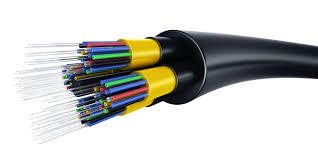
Tell us about your requirement

Price:
Quantity
Select Unit
- 50
- 100
- 200
- 250
- 500
- 1000+
Additional detail
Mobile number
Email

More Products in Single Mode Fiber Optic Cables Category
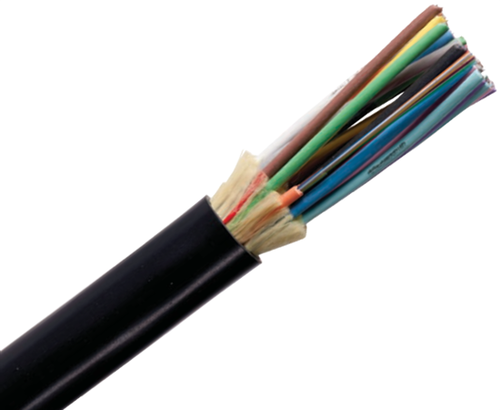
12 core fiber Optic cable
Price 30 INR / Meter
Minimum Order Quantity : 100
Usage & Applications : LAN/WAN Networks, Backbone, FTTH
Connector Color : Standard Color Code (Yellow/Blue/Green/Red)
Rated Temperature : 40C to +70C
Application : Other, Telecommunication, Data center networking, Broadband, FTTH, CCTV, Industrial automation.
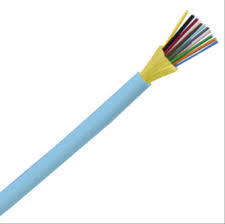
6 core fiber optic cable
Price 30 INR / Meter
Minimum Order Quantity : 100
Usage & Applications : Backbone cabling, industrial networks, video surveillance
Connector Color : Typically yellow or blue when terminated, field selectable
Rated Temperature : 20C to +70C
Application : Other, Data transmission, telecommunication, LAN/WAN networks, FTTX, CATV
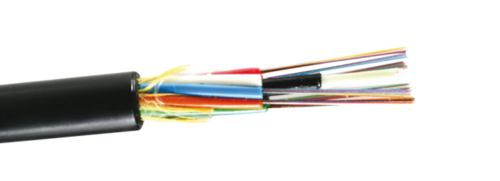
Single Mode Unarmoured Fiber Optic Cable
Price 30 INR / Meter
Minimum Order Quantity : 100
Usage & Applications : Outdoor and indoor installations for highspeed data transmission
Connector Color : Yellow (standard for single mode)
Rated Temperature : 40C to +70C
Application : Other, Telecommunication, Fiber to the Home (FTTH), Data centers, Networking, Broadband internet, Longdistance and metropolitan area networks
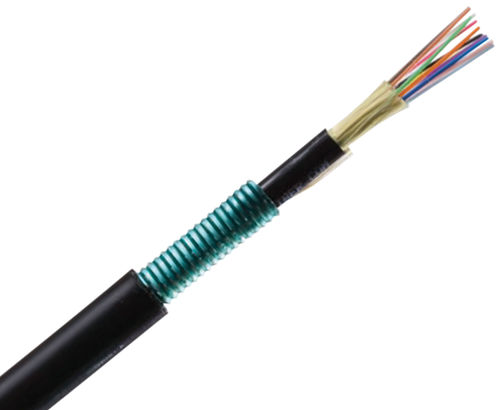
Armored Fiber Optic Cable
Price 30 INR / Meter
Minimum Order Quantity : 100
Usage & Applications : Telecom backbone, data transmission, LAN/WAN, CATV, military field use
Connector Color : Black (as per cable jacket)
Rated Temperature : 40C to +70C
Application : Other, Outdoor/Indoor, underground installation, direct burial, harsh environments, telecommunication network, data centers

 Send Inquiry
Our Products
- Single Mode Fiber Optic Cables
- Multi Mode Fiber Optic Cables
- ACSR Conductor
- Electrical Wires
- Aerial Bunched Cables
- Rubber Cables
- Networking Cable
- Fire Safety Equipments
- Electrical Conduit Pipes
- Electrical Conductors
- Cable Terminal & Lugs
- Screen Shielded Instrumentation Cables
- Porcelain Insulator
- Cable Trays
- Heat Shrinkable Cable Jointing Kit
- House Wire
- Power Control Cable
- Telecommunication Cables


No. 234, 3rd Floor, Garudachar Complex, (Above Hotel Vijay Vihar) Chickpet, Bengaluru - 560053, Karnataka, India

 Send Inquiry
 Send SMS
Developed and Managed by Infocom Network Private Limited.
