
Call us now :08045814271
 Send Inquiry
 Send Inquiry
Flame Retardant Industrial Cables
Price 30 INR/ Meter
Flame Retardant Industrial Cables Specification
- Tensile Strength
- >300 N/mm
- Install Type
- Indoor and Outdoor
- Core Material
- Copper
- Operating Temperature
- -10C to +85C
- Rated Temperature
- Up to 85C
- Insulation
- PVC Flame Retardant
- Weight
- Varies by length and size
- Conductor Shape
- Circular
- Diameter
- As per selected size
- Core Number
- 2, 3, or 4 core
- Usage & Applications
- Industrial wiring, Panel wiring, Machine connection, Fire safety systems
- Dielectiric Strength
- 2.5 kV for 1 Min
- Features
- High flame retardant properties, Durable and flexible design, Resistant to oils, chemicals, and abrasions, Enhanced safety for industrial environments
- Cable Type
- Low Voltage Power & Control Cable
- Armored Material
- Galvanized Steel
- Number of Conductor
- 2 to 4
- Conductor Type
- Stranded
- Impedance
- Standard per IS:1554/IS:694
- Product Type
- Flame Retardant Industrial Cable
- Length
- Customizable up to 500 meters
- Voltage
- Up to 1100V
- Insulation Material
- PVC Flame Retardant
- Application
- Industrial power and control circuits, Fire safety installations
- Conductor Material
- Electrolytic Grade Annealed Copper
- Jacket Material
- Special Flame Retardant PVC
- Storage Temperature
- -10C to +60C
- Connector Color
- Black
- Shield Material
- Aluminium Foil and Copper Braiding
- Jacket Color
- Black
- Dimension (L*W*H)
- Varies as per cable selection
- Color
- Black
- Material
- Copper & PVC
- Size
- 1.5 sq.mm to 35 sq.mm
- Water Resistance
- Yes, for specified models
- Smoke Emission
- Low smoke generation in fire
- UV Resistance
- Available on request for outdoor applications
- Halogen Content
- Non-halogenated options available
- Electrical Conductivity
- High conductivity copper >99.97% pure
- Flame Retardance Test
- IEC 60332-1-2 compliant
- Packaging Type
- Rolls or drums as per order quantity
- Standards
- IS 694, IEC 60332-1
- Minimum Bending Radius
- 12 x cable diameter
Flame Retardant Industrial Cables Trade Information
- Minimum Order Quantity
- 100 Meter
- Supply Ability
- 1000 Per Day
- Delivery Time
- 1 Days
About Flame Retardant Industrial Cables
Our company is offering an extensive range of Flame Retardant Industrial Cables which are equipped with pure electrolytic copper conductor. The provided cables are single core cables which can be availed in different colors. This type of cables are known for their excellent good thermal stability which makes highly useful. The cable can sustain extreme temperature with much ease. As these Flame Retardant Industrial Cables are made with premium quality copper, ensuring superior conductivity and true value for money.
Comprehensive Fire Protection
Our industrial cables utilize flame retardant PVC and comply with stringent standards such as IS 694 and IEC 60332-1-2. This provides advanced fire containment and minimizes smoke emission, crucial for safeguarding industrial environments and ensuring compliance with modern safety regulations.
Adapted for Harsh Environments
Built to withstand rigorous conditions, these cables are resistant to oils, chemicals, mechanical stress, and ultraviolet exposure upon request. Their robust construction and armored options ensure reliability for both indoor and outdoor installations, making them a dependable choice for a range of industrial sectors.
Customizable and Versatile Solutions
Customers benefit from tailored solutions with cable lengths up to 500 meters and core configurations of 2, 3, or 4, suitable for diverse applications like machine connection, panel or industrial wiring, and fire safety circuits. Drums and roll packaging options align with varied order requirements, ensuring project flexibility.
FAQs of Flame Retardant Industrial Cables:
Q: How do flame retardant industrial cables enhance safety in industrial installations?
A: These cables are designed with flame retardant PVC insulation and comply with IS 694 and IEC 60332-1 standards, significantly reducing fire propagation and smoke generation during a fire. This minimizes risk to both personnel and equipment, making them ideal for safety-critical environments.Q: What is the process for selecting the appropriate cable size and configuration?
A: Selection depends on application requirements such as voltage (up to 1100V), number of cores (2 to 4), conductor size (1.5 sq.mm to 35 sq.mm), and installation type (indoor or outdoor). Consult technical documentation or supplier recommendations based on specific current rating, mechanical, and environmental conditions.Q: When should I consider non-halogenated or UV resistant cable options?
A: Opt for non-halogenated cables in installations where low smoke and minimal toxic gas emission are priorities, especially in enclosed or high-occupancy areas. UV resistant options should be requested for prolonged outdoor deployments to protect cables from ultraviolet degradation.Q: Where can these cables be used and what are their primary applications?
A: These cables are suitable for industrial power distribution, machine and panel wiring, control circuits, and fire safety systems. They are robust for indoor usage and, with UV resistance, applicable for outdoor installations in factories, industrial plants, or fire-prone zones.Q: What are the main benefits of using high conductivity copper as the conductor material?
A: Utilizing copper with a purity greater than 99.97% ensures excellent electrical conductivity, reducing energy loss and enhancing operational efficiency. This quality also promotes long-term cable reliability and supports higher tensile strength (>300 N/mm), important in industrial contexts.Q: How does the installation process account for cable flexibility and minimum bending radius?
A: With a durable, flexible design and a minimum bending radius of 12 times the cable diameter, these cables can be routed efficiently through tight spaces or complex pathways, reducing mechanical stress and prolonging operational life during installation and service.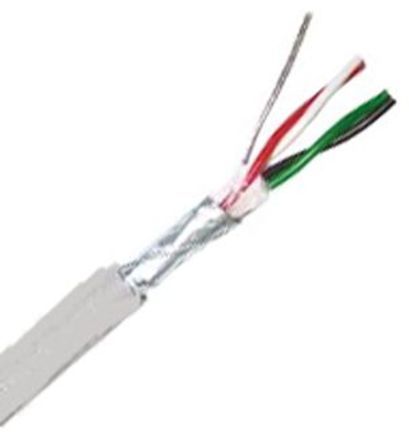
Tell us about your requirement

Price:
Quantity
Select Unit
- 50
- 100
- 200
- 250
- 500
- 1000+
Additional detail
Mobile number
Email

More Products in Rubber Cables Category
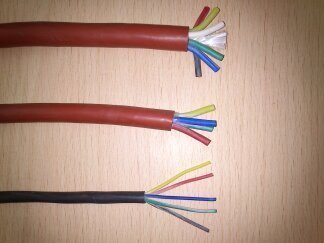
Silicone Insulated Cable
Price 30 INR / Meter
Minimum Order Quantity : 100
Dielectiric Strength : ~2.5 kV
Material : Silicone rubber, tinned copper
Features : High flexibility, excellent heat resistance, flame retardant, ozone resistant, weatherproof
Dimension (L*W*H) : Varies based on cable size (e.g. 1.5 mm x 100m coil)

Epr Rubber Cable
Price 30 INR / Meter
Minimum Order Quantity : 100
Dielectiric Strength : 2.5 kV for 15 min
Material : Ethylene Propylene Rubber, Copper
Features : High flexibility, heat resistant, oil resistant, weather resistant, flame retardant, durable insulation, outstanding mechanical strength
Dimension (L*W*H) : Varies as per cable size
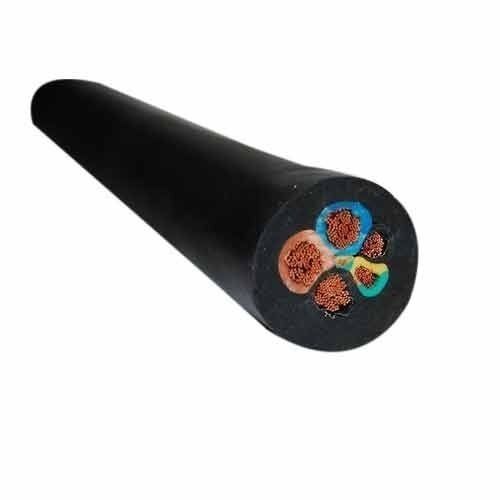
EPR Insulated Cable
Price 30 INR / Meter
Minimum Order Quantity : 100
Dielectiric Strength : 15 kV/mm (nominal).
Material : EPR, Copper, PVC/LSZH.
Features : Excellent electrical properties, resistance to moisture, UV, oil, and chemicals, high flexibility, and mechanical strength.
Dimension (L*W*H) : Custom as per cable size and order.
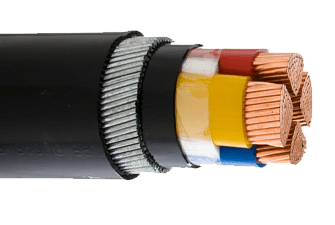
Pvc Insulation Cable
Price 30 INR / Meter
Minimum Order Quantity : 100
Dielectiric Strength : High Dielectric Strength, >3kV
Material : PVC & Copper
Features : High electrical insulation, Flame retardant, Flexible, Durable, Water resistant, Heat resistant, Crack proof
Dimension (L*W*H) : Custom / Standard, as per application

 Send Inquiry
Our Products
- Single Mode Fiber Optic Cables
- Multi Mode Fiber Optic Cables
- ACSR Conductor
- Electrical Wires
- Aerial Bunched Cables
- Rubber Cables
- Networking Cable
- Fire Safety Equipments
- Electrical Conduit Pipes
- Electrical Conductors
- Cable Terminal & Lugs
- Screen Shielded Instrumentation Cables
- Porcelain Insulator
- Cable Trays
- Heat Shrinkable Cable Jointing Kit
- House Wire
- Power Control Cable
- Telecommunication Cables


No. 234, 3rd Floor, Garudachar Complex, (Above Hotel Vijay Vihar) Chickpet, Bengaluru - 560053, Karnataka, India

 Send Inquiry
 Send SMS
 Call Me Free
Developed and Managed by Infocom Network Private Limited.
