
Call us now :08045814271
 Send Inquiry
 Send Inquiry
Telecommunication Cables Jelly Filled Cables
Price 30 INR/ Meter
Telecommunication Cables Jelly Filled Cables Specification
- Insulation
- Foamed Polyethylene or solid PE
- Install Type
- Direct burial, aerial, duct
- Operating Temperature
- -20C to +70C
- Dielectiric Strength
- 2kV/minute
- Conductor Type
- Solid
- Number of Conductor
- Varies (commonly 2, 5, 10, 20, 50, 100 pairs)
- Armored Material
- Steel Tape (Armored type only)
- Conductor Shape
- Round
- Tensile Strength
- Satisfies IS:1554 standards
- Weight
- Depends on pair count and length (typical 20-120 kg/km)
- Diameter
- As per specified pair count, typically 6mm to 25mm
- Usage & Applications
- Telephone exchange, outdoor network, direct burial, duct installations
- Impedance
- 120 Ohms (Nominal)
- Cable Type
- Jelly Filled Telephone Cable
- Core Material
- Polyethylene insulated twisted pairs
- Rated Temperature
- -20C to +70C
- Features
- Weather-resistant, robust, protection against moisture ingress via jelly filling, excellent signal transmission
- Core Number
- As per number of pairs
- Product Type
- Jelly Filled Telecommunication Cable
- Length
- 100m, 305m, 500m, 1000m (custom lengths available)
- Voltage
- 300V
- Insulation Material
- High-Density Polyethylene (HDPE)
- Application
- Telecommunication, voice transmission, data communication, indoor and outdoor cabling
- Conductor Material
- Electrolytic grade solid annealed copper
- Jacket Material
- Polyethylene (PE)
- Storage Temperature
- -20C to +65C
- Shield Material
- Aluminum tape or Poly-aluminum (as specified)
- Jacket Color
- Black or as per requirement
- Dimension (L*W*H)
- Varies as per number of pairs & size; contact for details
- Color
- Black
- Material
- Copper, Polyethylene, Jelly
- Size
- 0.4mm & 0.5mm conductor diameter (common sizes)
- Capacitance
- 56 5 nF/km (nominal)
- Fire Resistance
- Self-extinguishing and flame retardant (as per standard)
- RFI/EMI Performance
- Excellent immunity due to shield/jelly
- Operating Voltage
- Up to 300V
- Moisture Resistance
- High, due to jelly filling
- Mutual Capacitance Unbalance
- 1.2 nF/km (max)
- Minimum Bending Radius
- 15 x cable diameter
- Filling Compound
- Non-hygroscopic petroleum jelly
- Packing Type
- Wooden drums or as specified
- UV Resistance
- Provided with black PE sheath for UV protection
- Pair Identification
- Numbered and color-coded according to standard
Telecommunication Cables Jelly Filled Cables Trade Information
- Minimum Order Quantity
- 100 Meter
- Supply Ability
- 1000 Per Day
- Delivery Time
- 1 Days
About Telecommunication Cables Jelly Filled Cables
Telecommunication Cables Jelly Filled Cables are filled with special type of jelly with pressure pimp to make it resistance from moisture. It contains high quality petroleum jelly that is capable of providing water resistance, fire resistance and excellent insulation for each pair. In order to make these cables weather and high temperature proof, aluminum mailor foil is widely used with polyester film in their fabrication. Conforming to industrial quality standards these Telecommunication Cables Jelly Filled Cables are mainly used for underground telephone cabling.
Superior Moisture and Weather Protection
Jelly Filled Cables utilize a specially formulated, non-hygroscopic petroleum jelly to prevent water ingress. Combined with a UV-resistant black polyethylene sheath and self-extinguishing properties, they are engineered for longevity and dependable operation in demanding outdoor environments.
Exceptional Signal Integrity and Performance
With excellent EMI/RFI immunity, low capacitance variation, and uniform impedance, these cables maintain superior signal quality. The use of solid annealed copper conductors, high-density PE insulation, and precise shielding ensures data and voice communications remain crisp and clear over long distances.
Flexible Applications and Robust Construction
Suitable for telecommunication exchanges, outdoor networks, and duct installations, these jelly-filled cables come in multiple pair counts and lengths, accommodating diverse project needs. Armored and non-armored types, backed by rigorous standards, deliver versatile reliability in critical communication infrastructure.
FAQs of Telecommunication Cables Jelly Filled Cables:
Q: How does the jelly filling enhance the cables performance?
A: The non-hygroscopic petroleum jelly used as the filling compound prevents moisture from entering the cable, effectively protecting the inner conductors from water-induced damage and oxidation. This results in long-term, reliable signal transmission, even in environments prone to dampness or water exposure.Q: What benefits do jelly filled cables offer for telecommunication installations?
A: These cables provide robust moisture resistance, excellent immunity to electromagnetic (EMI) and radio frequency (RFI) interference, and strong UV and fire resistance. This makes them ideal for outdoor, direct burial, aerial, and duct installations where environmental conditions can compromise ordinary cables.Q: When should I choose an armored version of the jelly filled cable?
A: An armored version with steel tape should be selected for installations that require extra physical protection, such as direct burial in rocky areas or locations where mechanical stress is expected. The armor significantly improves the cables durability against external impacts.Q: Where are these jelly filled cables typically used?
A: These cables are commonly used in telephone exchanges, outdoor telecommunication networks, direct burial applications, aerial pathways, and duct installations. Their rugged construction makes them suitable for both urban infrastructure and remote area deployments.Q: What is the process for identifying cable pairs during installation?
A: Each pair within the cable is both numbered and color-coded following industry standards, ensuring straightforward identification and organization during installation, maintenance, or splicing. This minimizes errors and speeds up the wiring process.Q: How is the cable protected against UV radiation and fire hazards?
A: A black polyethylene (PE) sheath offers strong UV protection for outdoor installations, while the cables construction meets fire retardant and self-extinguishing standards. This dual protection maintains cable integrity under various environmental stresses.Q: What are the standard lengths and sizes available for these cables?
A: Jelly filled telecommunication cables are available in lengths of 100m, 305m, 500m, and 1000m, with custom lengths offered as needed. Common conductor diameters include 0.4mm and 0.5mm, and pair counts range from 2 to 100 pairs, accommodating diverse installation requirements.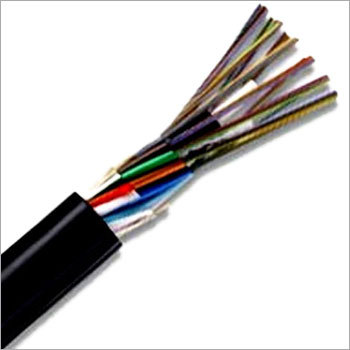
Tell us about your requirement

Price:
Quantity
Select Unit
- 50
- 100
- 200
- 250
- 500
- 1000+
Additional detail
Mobile number
Email

More Products in ACSR Conductor Category
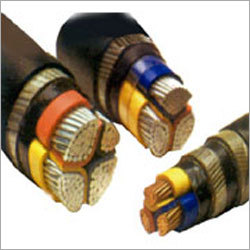
LT PVC XLPE Power Control Cable
Price 30 INR / Meter
Minimum Order Quantity : 100
Size : Range from 1.5 sq.mm to 400 sq.mm
Voltage : Other, Upto 1100 Volts
Rated Temperature : 10C to +90C
Length : Available in standard and custom lengths up to 1000 meters
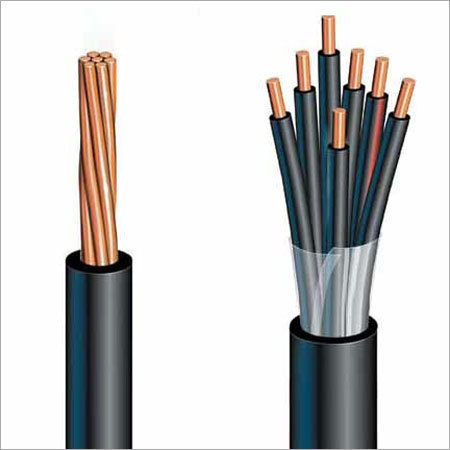
Silicon EPR Rubber Cables
Price 30 INR / Meter
Minimum Order Quantity : 100
Size : 0.5 sqmm to 120 sqmm
Voltage : Other, Up to 1100V
Rated Temperature : 60C to +180C
Length : Available in custom lengths (standard rolls 100 m, customizable as per requirement)
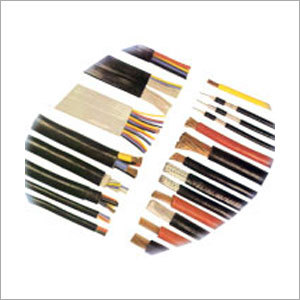
Copper Single Multicore Flexible Cable
Price 30 INR / Meter
Minimum Order Quantity : 100
Size : 0.5 Sqmm to 240 Sqmm
Voltage : Other, Up to 1100V
Rated Temperature : 70C
Length : Available up to 500 meters or as specified
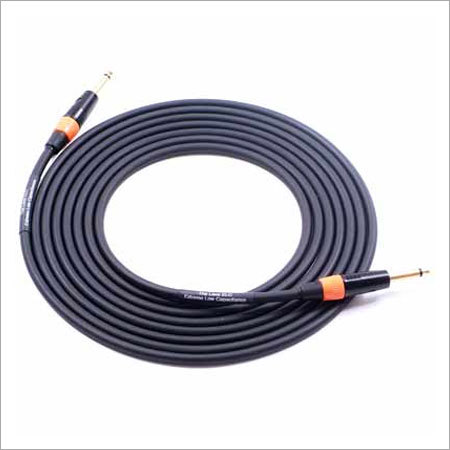
Shielded Instrumentation Cable
Price 30 INR / Meter
Minimum Order Quantity : 100
Size : 0.5mm, 0.75mm, 1mm (Other sizes available)
Voltage : Other, 300V
Rated Temperature : 20C to +70C
Length : 100 meters (Custom lengths available)

 Send Inquiry
Our Products
- Single Mode Fiber Optic Cables
- Multi Mode Fiber Optic Cables
- ACSR Conductor
- Electrical Wires
- Aerial Bunched Cables
- Rubber Cables
- Networking Cable
- Fire Safety Equipments
- Electrical Conduit Pipes
- Electrical Conductors
- Cable Terminal & Lugs
- Screen Shielded Instrumentation Cables
- Porcelain Insulator
- Cable Trays
- Heat Shrinkable Cable Jointing Kit
- House Wire
- Power Control Cable
- Telecommunication Cables


No. 234, 3rd Floor, Garudachar Complex, (Above Hotel Vijay Vihar) Chickpet, Bengaluru - 560053, Karnataka, India

 Send Inquiry
 Send SMS
Developed and Managed by Infocom Network Private Limited.
